Construction Solution
Odoo ERP Solution for Construction and Public Works
They trust us

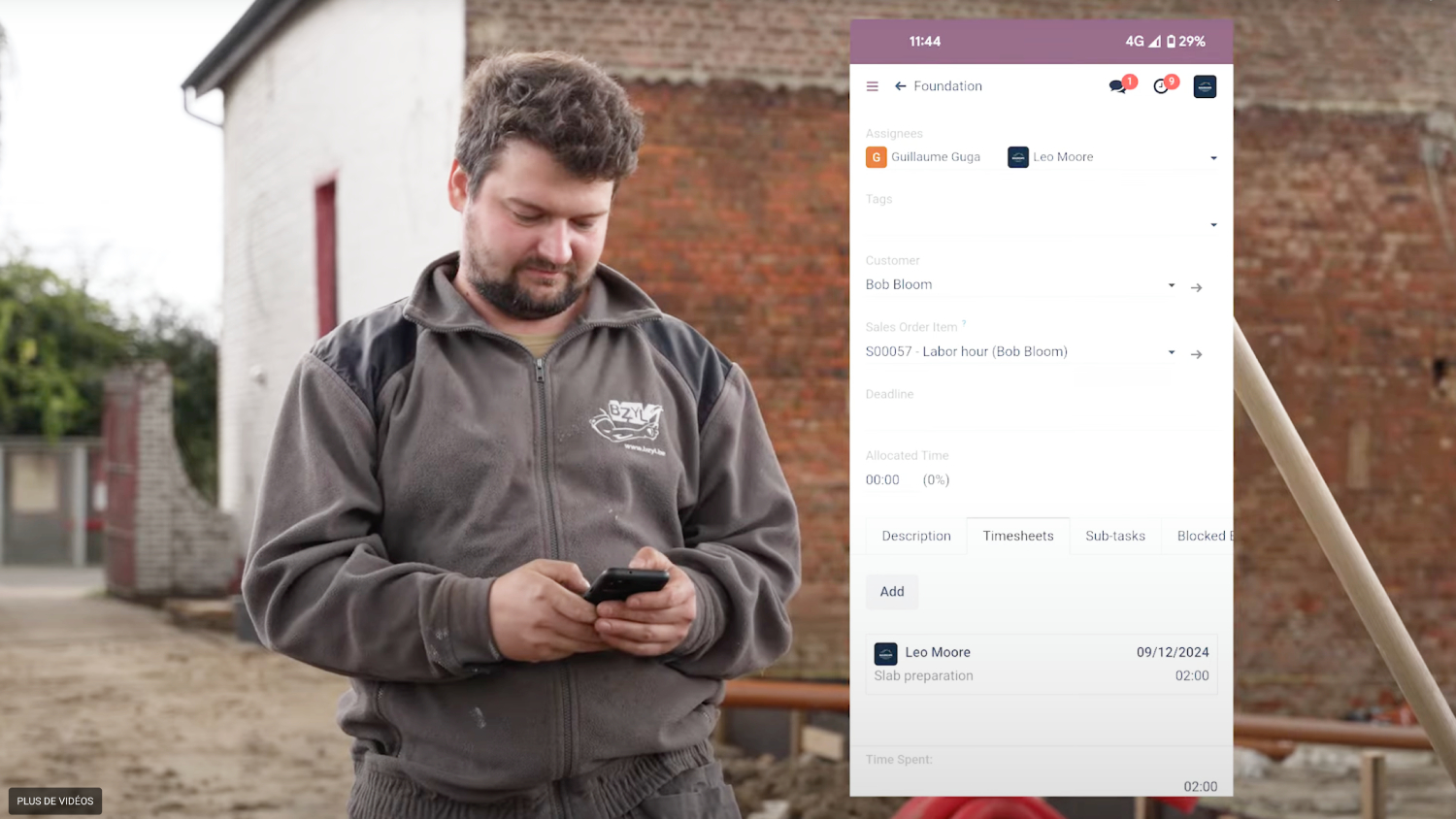
Manage project progress, invoicing, and profitability across your construction sites
within a unified ERP.
The Odoo solution integrated by Eezee is designed for construction companies looking to structure their operations, ensure reliable site tracking, and gain better control over their margins.
Built for construction companies, general contractors, and multi-site operations, this Odoo-based ERP
solution enables end-to-end project management, from quotation to invoicing.
By connecting all your construction operations within Odoo, you eliminate friction
between site execution, invoicing, and financial control, ensuring seamless and reliable project
management.
Key benefits
of an Odoo ERP
for
construction companies

1Gain full control over the real profitability of each project
Track costs, time spent, progress, and margins in real time by site, work package, or unit of work, with continuous comparison between planned and actual figures.
2Invoice in line with on-site reality
Link site progress reports to progressive invoicing to secure cash flow, avoid discrepancies, and reduce
disputes.
3Improve collaboration with your teams and subcontractors
Centralize all site-related information, documents, and communications to reduce friction and ensure reliable on-site follow-up.
4Centralize your operations in a unified and scalable ERP
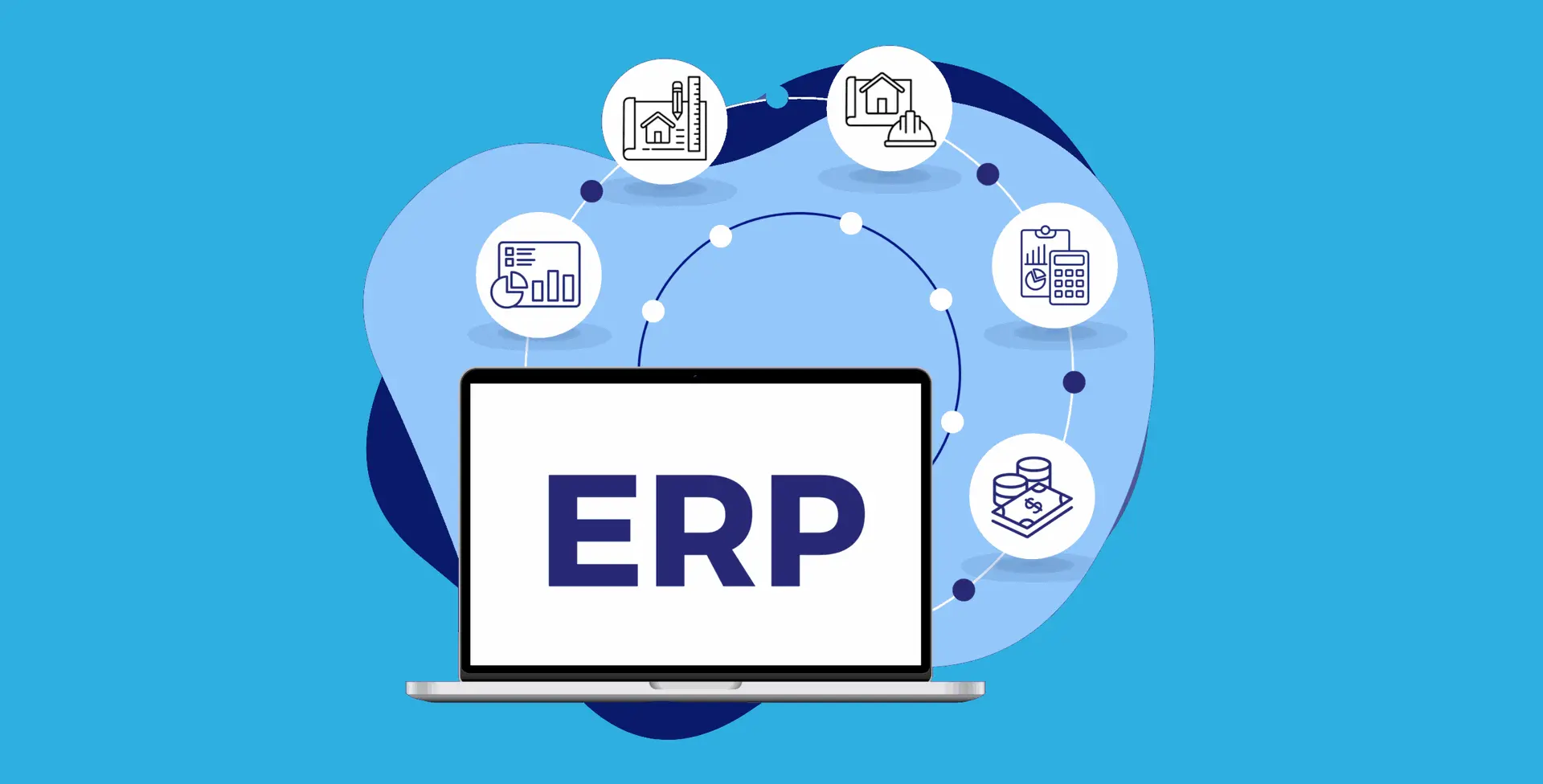
Quotes, projects, subcontractors, documents, purchasing, invoicing, and analytics are brought together in a single platform designed to support growth and process structuring.
trust us


Discover how a dedicated Odoo solution for Construction
can turn challenges into performance drivers.

An ERP solution
designed for construction companies
Why is it essential?
This solution is aimed at construction companies that need to manage multiple sites, on-site teams, and subcontractors, while maintaining precise control over costs, progress, and margins.
It is particularly well suited for:
- General construction and structural work companies
- Growing or structuring multi-site construction firms
- Companies managing complex quotes, variations, and work packages
- Organizations working with on-site teams and subcontractors
- Companies using progressive or progress-based invoicing
- Structures seeking reliable visibility on costs and margins by site, phase, or work package
- Companies whose current tools (Excel, isolated software) no longer cover the entire project lifecycle
 Objective:
Structure your project with a clear,
Objective:
Structure your project with a clear,
optimized vision, integrated into your environment. Learn more about our approach
What operational challenges
do construction companies face?
As the number of projects increases and organizations grow more complex, effectively managing progress, costs, and profitability becomes a central challenge for construction companies.
-
Tracking real project progress
Having a reliable, shared view of actual site progress remains difficult, even though it directly impacts invoicing and profitability. -
Controlling costs and margins during the project
Gaps between planned and actual figures are often identified too late, once the financial impact has already occurred. -
Efficient resource planning
Coordinating teams, equipment, and materials becomes complex when information is scattered across tools. -
Structured subcontractor management
Tracking subcontractor work, documentation, and progress often lacks clarity and consistency. -
Connecting site management with finance
Operational management and accounting frequently remain disconnected, limiting a global view of performance.
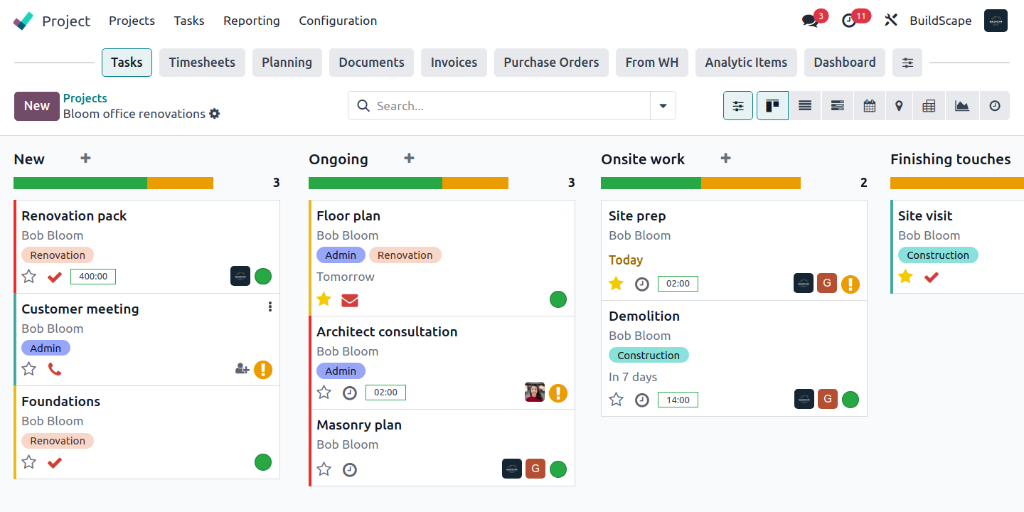
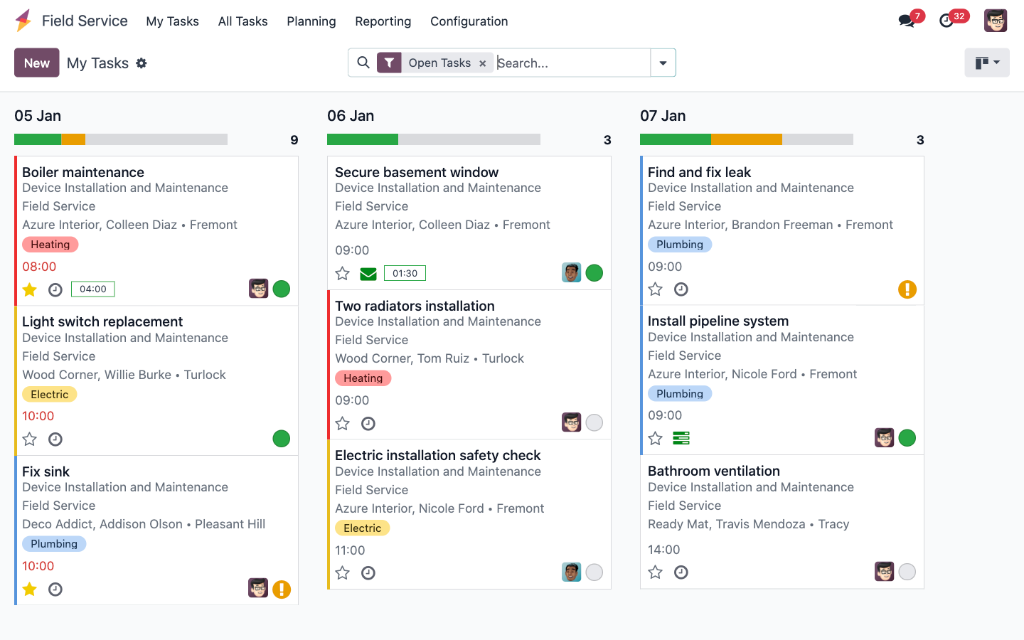
Why traditional construction software reaches its limits
Specialized construction tools often address a specific need.
But when it comes to managing an entire project from progress tracking to profitability their functional scope becomes a constraint rather than an enabler.
Discover our comprehensive methodology
Structural limitations
- Tools designed for isolated use → Each solution covers a specific function (quoting, planning, site tracking, accounting) without a cross-functional project view.
- No native link between operations and finance → Site data cannot be directly used to analyze costs, invoicing, and margins in real time.
- Difficulty modeling real business complexity → Work packages, units of work, variations, or complex progress states are often poorly supported.
- Limited scalability → These tools quickly reach their limits as projects multiply or organizational structures evolve.

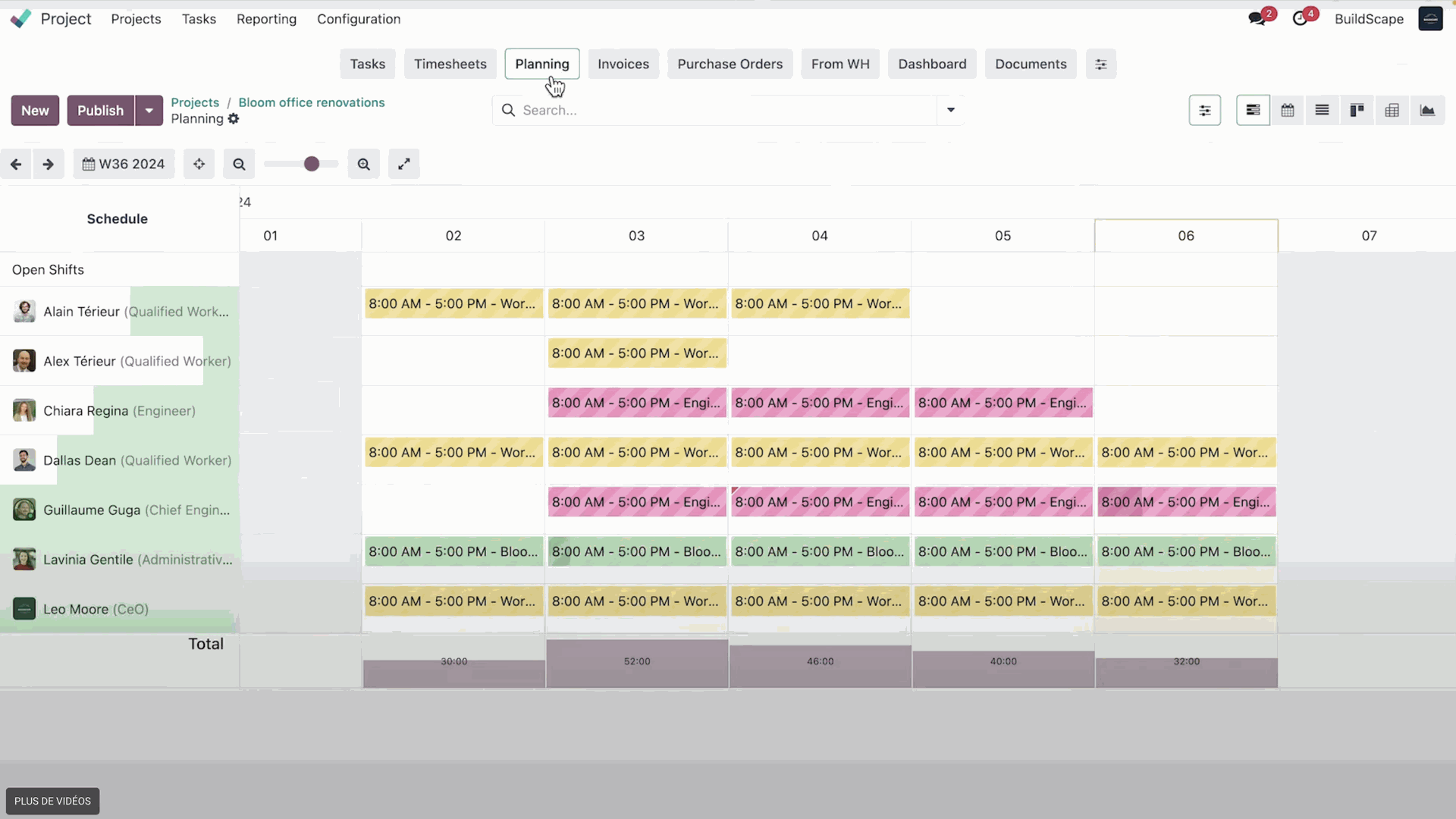
Odoo, a unified ERP foundation
to manage your construction projects
To overcome the limitations of specialized tools and finally connect site operations with finance, construction companies need a single foundation. An ERP centralizes all data related to quotes, projects, resources, invoicing, and accounting into one coherent system.
With Odoo, each project is managed holistically: operational data directly feeds financial and analytical reporting, providing a reliable view of costs, progress, and margins. The solution evolves with the company, adapts to increasing project complexity, and supports the gradual structuring of processes without disruption or duplicate data entry.
Let’s discuss your needs and explore how Odoo can
support your construction projects.
can turn challenges into performance drivers. Book a demo
Eezee’s approach to adapting Odoo
to construction realities
Odoo is a powerful, cross-functional ERP.
Eezee’s value lies in its ability to transform this ERP foundation into a true industry-specific
management tool
for construction companies, taking into account site realities, operational constraints, and
financial challenges.
Our approach is not about applying a standard model, but about structuring and configuring Odoo
around your projects,
work packages, and real operational flows, ensuring full continuity between quoting, execution,
invoicing, and profitability.

Quotes structured by work packages and units of work
Eezee designs quotes as the foundation for site management.
Work packages and units of work
structure projects from the commercial phase onward, providing clear visibility on quantities, costs,
variations, and margins.
This approach makes it possible to manage complex quotes with multiple levels of detail, technical variations, and evolving assumptions.
Work packages become a shared structure used throughout the project lifecycle: quoting, production, site tracking, invoicing, and analytics.
This ensures full consistency between what is sold, what is delivered, and what is financially analyzed.

Reliable progress tracking and progressive invoicing
In construction, invoicing is inseparable from actual site progress.
Eezee implements mechanisms that link progress tracking to work progress statements, based on reliable operational data.
Progress can be tracked by phase, work package, or task, depending on the company’s operational reality.
This structure enables consistent progressive invoicing, secures cash flow, and limits discrepancies or disputes.
At the same time, profitability is monitored continuously, without waiting for project closure.

Site management and on-site team coordination
Projects are managed in Odoo through a site-adapted project structure, integrating planning, tasks,
internal resources, and subcontractors.
On-site teams have a clear view of their tasks and expected progress, while managers can track the overall status of projects.
Information related to interventions, technical documents, and subcontracted work is centralized and accessible, reducing blind spots and approximations.
This approach fosters better coordination between stakeholders and faster decision-making.

Direct link between operations, finance, & analytics
One of the key elements of Eezee’s approach is the direct connection between operational site tracking and finance. Field data automatically feeds analytical accounting and budget monitoring.
Eezee sets up analytical structures to analyze costs, margins, and variances by site, phase, or work package.
Comparisons between planned and actual figures are continuously available, providing a reliable view of financial performance.
Management no longer relies on estimates or external files, but on real, consistent data.
A pragmatic and progressive implementation
Each implementation project is approached pragmatically and progressively, taking into account team
maturity, existing tools, and business priorities.
The goal is not to transform all processes at once, but to build a solid and scalable foundation.
Eezee supports companies in a gradual ramp-up, with measurable results at each stage: better visibility, improved invoicing, stronger margin control.
This approach reduces risk, encourages team adoption, and ensures a tangible return on investment.

Customer references
in
the construction sector with Odoo
In the construction sector and related activities, Eezee has supported organizations seeking to structure their operations, improve productivity, and gain visibility across their processes from lead to invoicing, while improving on-site coordination.
M2O
Context
M2O, specializing in the construction, maintenance, and renovation of traditional swimming pools, was limited by the use of Excel and a basic logistics tool to manage its activities. This impacted visibility, planning efficiency, and coordination between teams.
Implemented approach
Eezee deployed a full Odoo ERP platform to:
- integrate sales and accounting, automating processes and reducing errors
- optimize technician planning, including intervention and time tracking
- centralize data to improve coordination between field teams and back office
Results
- smoother operations with increased visibility
- optimized planning and reduced administrative workload
- improved collaboration between teams and the ability to manage higher activity volumes without additional administrative burden


Benoît Bernard
Benoit Bernard is a company specialized in construction and renovation works. Before partnering with Eezee, the company faced challenges in structuring its operations, particularly in quotation management, site follow-up, and internal coordination between office and field teams.
Implemented approach
Eezee implemented:
- an integrated Odoo solution to centralize quotations, sales orders, and invoicing
- a project management module tailored to construction sites, enabling detailed follow-up of each project
- a planning tool to better allocate teams and manage on-site interventions
- a unified system connecting office and field teams to improve real-time communication
Results
- faster and more structured quotation and invoicing processes
- better visibility on project progress and profitability
- improved coordination between administrative and field teams
- reduced manual work and fewer operational errors

Take control of your construction projects
and profitability
Track costs, manage margins, and make better decisions at every stage of your projects with a fully integrated ERP.
Ready to Transform
Your
Construction Operations?
With Eezee-it, you gain full control over your construction projects,
streamline site management, and secure your margins. Whether you manage multiple sites, on-site teams, or
subcontractors, the Construction Solution is your end-to-end Odoo-based ERP.

FAQ – Odoo ERP for construction companies
Odoo centralizes operational project data in a single platform, without requiring everything to be
formalized at once.
Depending on the company’s size and maturity, it is possible to:
- start with a few key indicators (planning, timesheets, purchases)
- progressively structure tracking by phase or work package
- enrich the data as processes mature
Information coming from quotations, purchases, timesheets and planning feeds a shared view between site teams, office staff and management, enabling reliable tracking based on real execution data.
Yes. With Odoo, invoicing can be directly linked to the structure of the quotation and to the real
progress of the project.
The quotation becomes the reference:
- phases or work packages define billable amounts
- validated progress automatically feeds invoicing
- invoices reflect the work actually completed
This approach facilitates progress billing, secures cash flow and limits discrepancies between what was sold, executed and invoiced.
Odoo directly links operational data with analytical accounting.
Each project can become an analytical axis allowing you to:
- track real costs (time, purchases, subcontracting, expenses)
- continuously compare budgeted and actual costs
- analyze profitability by project, phase or work package
Margins are no longer known only at project completion, but monitored during execution, enabling quicker detection of deviations and better operational decisions.
Yes. Odoo allows you to structure subcontractor management and project-related commitments.
It becomes possible to:
- track orders, validations and delivered work
- centralize documents, certificates and communications
- integrate subcontractor costs directly into financial analysis
Subcontracted work is therefore managed in the same environment as the project itself, ensuring full visibility on responsibilities and margins.
Yes. Odoo becomes particularly strategic when a company runs several projects simultaneously.
It allows you to:
- obtain a consolidated view of workload, costs and margins
- allocate resources between projects according to priorities
- anticipate operational or financial deviations
In this context, the ERP becomes a decision-support tool that helps secure growth and improve financial predictability.
Odoo allows you to centralize supplier information and purchase costs in a single database,
directly linked to products and projects.
It becomes possible to:
- register multiple suppliers for the same material or service
- store negotiated prices, discounts and specific conditions
- manage supplier framework agreements
- automatically use these costs in purchases, quotations and margin analysis
This centralization avoids discrepancies between theoretical prices and real costs and helps secure both project costing and financial monitoring.
Some tools on the market focus mainly on operational project management (such as Vertuoza, for
example).
They may be appropriate when the main objective is to improve site tracking.
However, as the company grows, additional needs often emerge:
- linking projects to accounting and global profitability
- consolidating multiple activities or entities
- centralizing CRM, purchasing, inventory and reporting
In this context, an ERP makes it possible to unify all company processes within a single environment, supporting growth and strategic decision-making.