In the food industry, traceability is not just a regulatory obligation. It is a safety net, a business issue and, often, a revealing indicator of how solid an organization really is. As long as everything goes well, it feels like things are “under control”. But the day a customer asks for a complete batch history, an audit arrives earlier than expected, or a recall needs to be launched, the question is no longer theoretical:
Are you truly able to reconstruct the chain quickly, calmly… and without mobilizing the entire company for hours?
In the field, we often see a mixed reality: ERP systems in place, formalized procedures, sometimes quality tools… but also Excel files, local habits, information scattered across teams, and a strong dependency on certain key individuals. Traceability exists, but its reliability sometimes depends more on people than on clear, shared and well-supported processes.
And this is the core issue: truly reliable traceability does not depend solely on the technology used, but on how the organization has structured itself to make it possible.
In this context, Odoo can play an important role — provided it supports this structure rather than attempting to replace it.
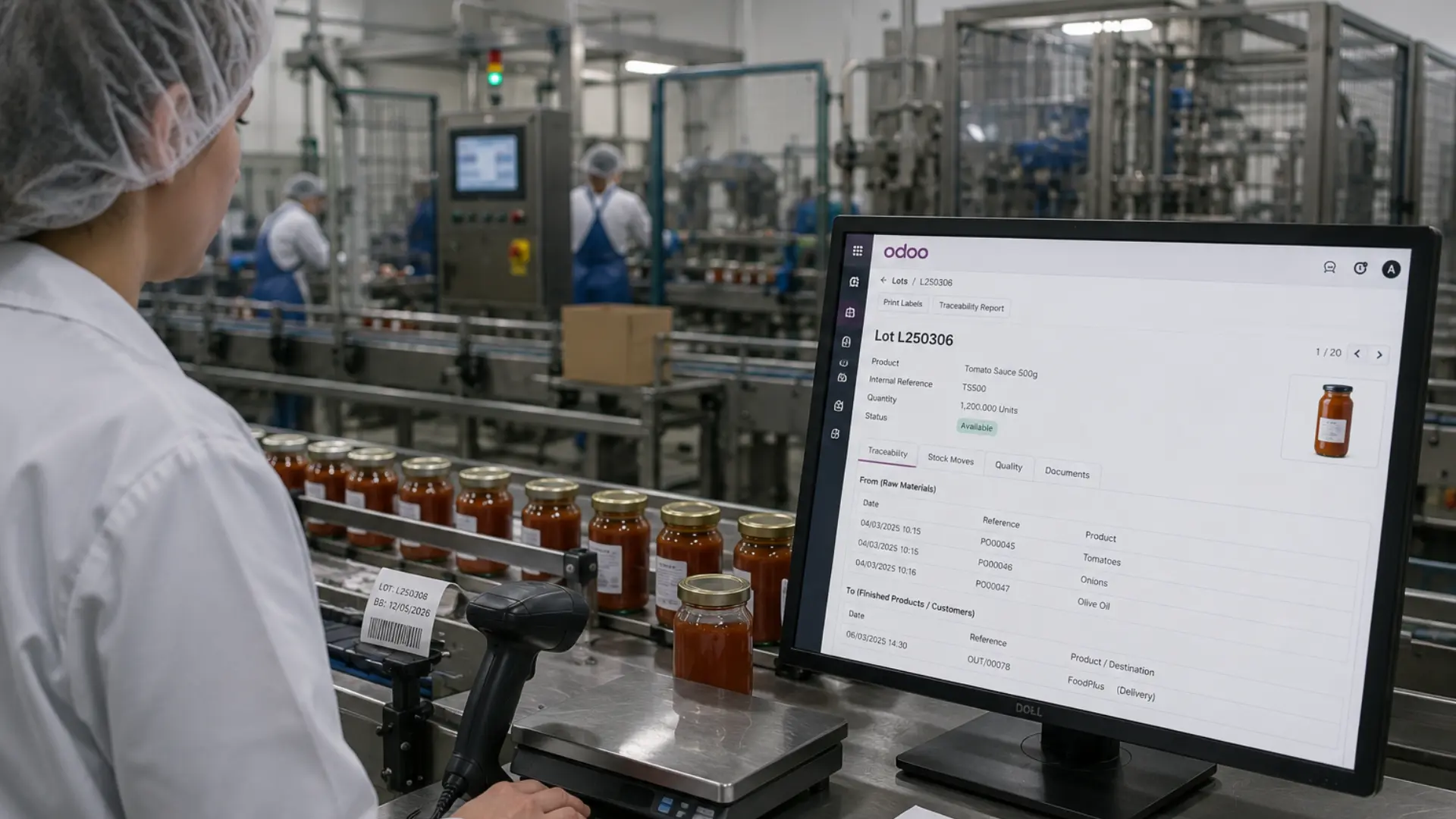
1. Between theory and reality: why food traceability is often more fragile than we think
On paper, food traceability looks like a well-oiled machine: every batch is recorded, every transformation is documented, every movement is tracked from supplier to final customer. Everything should therefore be easy to reconstruct. In reality, it is rarely that linear.
Over time, organizations accumulate operational layers: new products, new sites, subcontractors, co-packing, specific customer requirements, team changes… and processes evolve, sometimes without being truly harmonized. Information exists, but it is fragmented: partly in the ERP, partly in personal files, partly in the heads of operational teams.
The result: as long as everything works “as usual”, traceability seems to be in place.
But as soon as an unexpected event occurs, certain weaknesses appear:
- strong dependency on a few key people
- gaps between official procedures and actual field practices
- partially entered or duplicated data
- reconciliations that still require Excel
- batches that are difficult to track across multiple stages
And it is often during an audit, a non-compliance issue or an urgent customer request that companies realize traceability exists… but is not always easy, fast or stress-free to reconstruct.
This is not a sign of negligence. It is the natural consequence of a fast-evolving activity in a demanding sector with strong operational constraints.
But that is precisely why traceability should be viewed not as simple “reporting”, but as a true organizational system.
When traceability relies on tools rather than on clear processes
Faced with these challenges, many companies respond by adding or strengthening tools: a more comprehensive ERP, a quality module, a WMS, more structured batch tracking… And this is, of course, essential.
But one observation comes up again and again: the tool alone is not enough to guarantee truly reliable traceability.
Why? Because traceability does not originate from technology, but from how the organization operates on a daily basis.
When processes are not clearly defined, shared and applied, the tool becomes:
- either a constraint to work around
- or a partial database completed elsewhere
- or a “theoretical reflection” of the flow that does not always match reality
➤ Data is entered “later”.
➤ Local adaptations are made.
➤ Certain steps are simplified to save time.
➤ Complementary files are kept “just in case”.
And gradually, traceability relies less on a structured system… and more on the goodwill and vigilance of the teams.
As long as everything goes well, it works.
But in the event of an incident, a recall or a surprise audit, reconstructing information becomes a complex, time-consuming and stressful exercise.
Conversely, when processes are clear, simple and shared by everyone, the ERP becomes a natural support for these practices. Teams work within an aligned framework. Data is entered where it should be. And traceability becomes a logical consequence of daily operations not an additional effort.
This is precisely where the difference lies between theoretical traceability… and robust, operational traceability.
2. What makes food traceability truly robust in practice
When we look at food organizations with strong traceability, one common point quickly emerges: it is not the sophistication of the tools that makes the difference, but the clarity and consistency of the processes.
In practice, reliable traceability is built on a few simple, yet demanding, fundamentals:
- clearly defined end-to-end flows
from raw material reception to shipment, including transformations, repackaging, co-packing, returns, etc. - unambiguous roles and responsibilities
everyone knows exactly when, where and how to enter critical information. - shared and realistic rules
adapted to field reality, applicable under pressure, independent of individuals.
- centralized and accessible information
not scattered across personal folders, emails and parallel files. - smooth, non-punitive operational discipline
where traceability is a support tool… not an administrative burden.
These elements transform traceability into a living system, embedded in daily operations.
A system that works even when a key person is absent.
➤ Even when an audit arrives earlier than expected.
➤ Even when a customer asks for a full history within the hour.
And above all: a system that remains simple.
Because in a demanding industrial environment, robustness does not come from complexity… but from the ability to repeat, day after day, the right actions, at the right time, with the right information. This is where the ERP truly comes into its own.
3. The role of Odoo in well-structured food traceability
When an organization has clarified its processes and structured its traceability flows, Odoo becomes a true operational lever.
The ERP is no longer just an administrative tool: it becomes the digital backbone that supports daily discipline, consistency and visibility.
In this context, Odoo makes it possible to:
-
track batches and serial numbers throughout the entire chain, from reception to final customer delivery
-
link each transformation to its inputs, to reconstruct a clear and complete history
-
manage expiration dates and best-before dates, enabling anticipation rather than reaction
-
integrate quality controls as close as possible to operations, without multiplying tools
- align production, logistics, purchasing and sales around a single source of truth
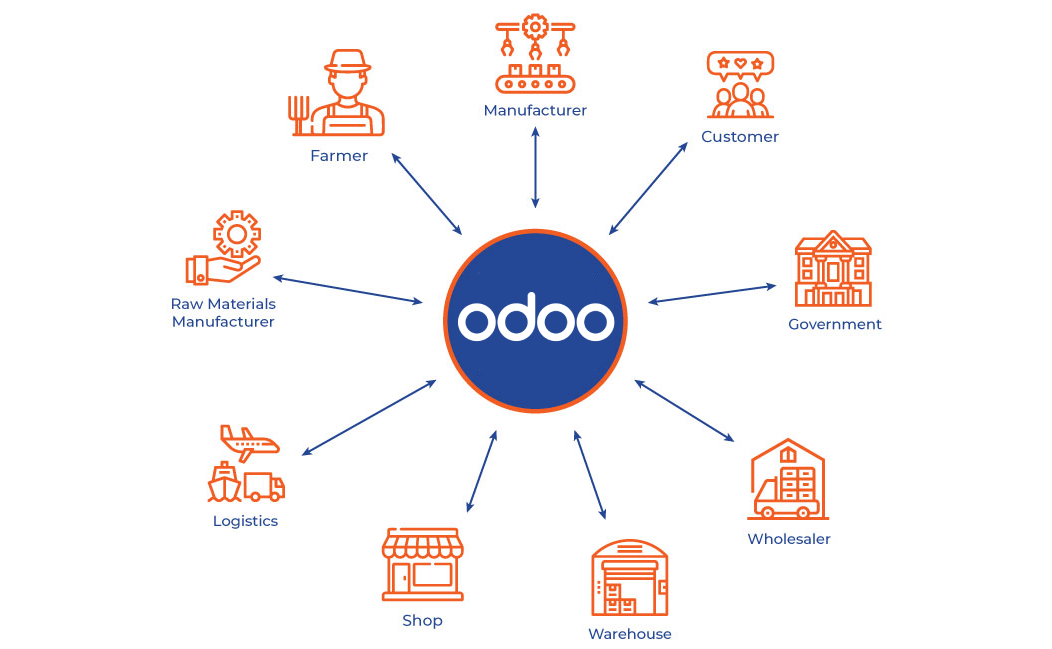
The goal is not just to “collect data”, but to make this information reliable, structured and usable both during audits and in day-to-day operations.
Odoo’s value fully emerges when teams operate within a simple and coherent framework. Data entry becomes natural. Reconciliations happen without extra effort. And traceability becomes a direct result of doing the job right not a parallel project to maintain.
In this approach, the ERP does not impose its logic: it supports the organization and helps it gain peace of mind, visibility… and professionalism.
4. From compliance to performance: how Odoo and clear processes transform food traceability
When traceability is clear, centralized and supported by a well-used ERP, its impact goes far beyond regulatory compliance. It becomes a true performance lever for the company.
First, it reduces operational risk.
In the event of an audit, non-compliance or product recall, the ability to quickly trace a batch’s history avoids bottlenecks, endless searches and organizational stress. Decisions are made based on facts, not assumptions.
Second, it improves cost control.
Better visibility on stocks, expiration dates and transformation flows reduces losses, waste and stock-outs. Planning becomes more accurate. Teams spend less time “reconstructing information” and more time managing the business.
It also strengthens relationships with customers and partners. Being able to demonstrate reliable, simple and fast traceability sends a clear signal of professionalism and operational maturity. In a sector where trust is essential, this is a real competitive advantage.
Finally, robust traceability creates a healthy foundation for growth. It makes it easier to absorb the opening of a new site, the launch of new products, volume increases or the integration of external partners. The organization becomes less dependent on individuals and more resilient to change.
In short: traceability is not just a compliance tool. When well designed and well supported, it becomes a structuring element for performance and long-term sustainability.
Our belief: the key is not the ERP, but how it serves your processes with the right ERP partners
Every food organization has its own realities, constraints and field culture. Trying to “force-fit” these specifics into a system without taking the time to structure processes often adds complexity sometimes even at the expense of traceability.
Conversely, when time is taken to understand flows, involve teams and build simple, shared processes, the ERP naturally finds its place. Odoo then becomes a lever serving the organization not the other way around.
And because it is difficult to gain this perspective alone, being well supported makes a real difference. Working with partners who understand your business, your challenges and your operational constraints allows you to move forward with greater confidence, making structured and sustainable choices.
This is how reliable traceability is built: through clear processes, engaged teams… and pragmatic support.
5. Real-life case: strengthening food traceability with Odoo at De Ster
De Ster is a family-owned manufacturer of artisanal mustard, active in Belgium and the Netherlands. The company operates exclusively in B2B, supplying stores, restaurants and distributors, with products adapted to different formats depending on customer needs.
Before implementing Odoo, a large part of operations was managed manually (emails, Excel files, paper documents), which limited stock visibility, complicated order tracking and made invoicing management heavier.
The objective was twofold:
improve batch traceability and structure all operations within a single system.
Thanks to the deployment of Odoo, the CRM, Sales, Invoicing and Inventory modules now work together within an integrated platform. De Ster can track batches end-to-end, centralize orders, access real-time stock visibility and automate electronic invoicing via Peppol.
The result:
fewer manual processes, improved operational visibility and full batch traceability in support of quality and compliance.
A concrete example showing how, when processes are well defined, an ERP like Odoo becomes a true enabler of performance and traceability.
Read the customer case : DE STER
Another example: structuring large-scale traceability with Odoo at Atlas Servair
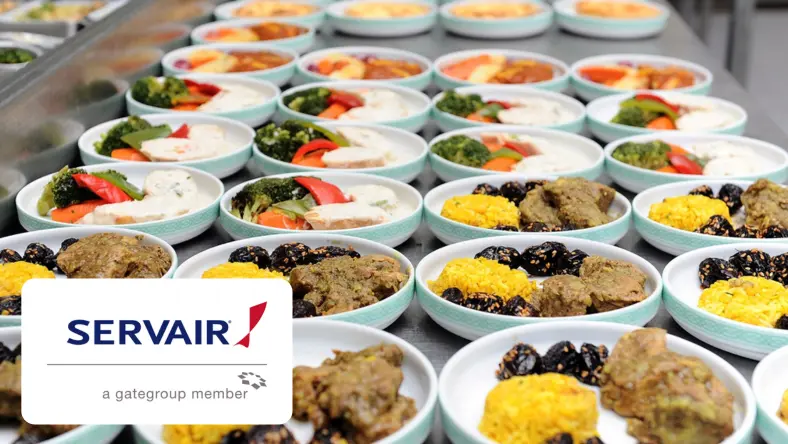
Beyond food SMEs, some organizations operate in even more complex environments. This is the case of Atlas Servair, the Moroccan leader in airline catering and a member of Gate Group. The company prepares tens of thousands of meals every day for multiple airports, with high requirements in terms of quality, traceability and logistical planning.
The Goal:
Was not only to digitize processes, but to build an organization capable of precisely tracking flows, reducing waste, ensuring compliance and supporting growth.
With Odoo as an integrated platform covering production, logistics, finance and onboard sales Atlas Servair was able to automate meal planning based on flight data, strengthen stock control, improve financial visibility and structure operations around clear, centralized processes.
A project that shows that even at scale, traceability and operational efficiency depend first and foremost on process alignment before technology.
Read the customer case : SERVAIR
Conclusion: building reliable food traceability starts with building a reliable organization with Odoo serving your processes
Food traceability is often perceived as a technical topic. In reality, it is a matter of organization, people and collaboration.
By structuring your processes, involving your teams and then relying on an ERP like Odoo supported by partners who truly understand your business — traceability stops being a constraint. It becomes an asset: for compliance, performance and the trust of your partners.
Book a call

This article is part of our Odoo ERP expertise for the food industry.
Discover how we support food businesses on our Solutions page.
Discover our Food & Beverage Solution
Building reliable food traceability with Odoo