
- The common thread running through Odoo 20
- 1. gentic AI: the real paradigm shift in Odoo 20
- Our view on AI in Odoo
- 2. Field Service + Planning merger: the redesign for service businesses
- 3. Odoo 20 Accounting: three developments finance teams have been waiting for
- 4. Data and operational management: Odoo 20 finally strengthens operational analytics
- What about Odoo 20 verticals?
- Should you migrate to Odoo 20?
- A migration is also an opportunity
- Our migration team
Odoo 20 wordt officieel voorgesteld op de Odoo Experience in Brussel, van 24 tot 26 september 2026. De roadmap werd op 2 april 2026 onthuld tijdens de Odoo Partner Day door Luc Nailis, Product Owner bij Odoo, voor het volledige netwerk van gecertificeerde partners waaronder Eezee. Ze bevat tientallen evoluties. Zoals bij elke versie zal het ecosysteem uitputtende lijsten produceren van "alles wat verandert in Odoo 20".
Dit artikel maakt de omgekeerde keuze. In plaats van alles op te sommen, lichten we de vier strategische evoluties uit die er écht toe doen voor een kmo — die op zichzelf al rechtvaardigen dat een bedrijfsleider of financieel verantwoordelijke zich in Odoo 20 verdiept.
Voor we beginnen, een nuttige verduidelijking: een roadmap is geen uitgebrachte versie. Odoo zegt het zelf met een knipoog: een roadmap is een "lijst van dingen die we misschien zullen doen, of ook niet". Sommige functionaliteiten zullen nog evolueren voor de release. Het gaat hier om strategische richting, niet om een definitieve belofte.
De rode draad van Odoo 20
Als je afstand neemt van de nieuwigheden van Odoo 20, valt er duidelijk een patroon op. Odoo stopt met het stapelen van modules en begint ze te fuseren. Tegelijkertijd neemt het platform beslissingen die aansluiten bij de vereisten van volwassen bedrijven: schaalbaarheid, automatisering, datagedreven sturing.
Voor bedrijven die al een georganiseerd financieel team hebben, geformaliseerde processen en een echte afhankelijkheid van hun ERP, is dit signaal belangrijk. Odoo blijft doorgroeien naar het hogere segment van de kmo-markt, en Odoo 20 bevestigt die koers.
Vier evoluties verdienen het om er serieus bij stil te staan: agentische AI, de fusie van Field Service / Planning, de vernieuwingen in Boekhouding, en de kwaliteitssprong op het vlak van data en sturing. De rest vernieuwde Payroll, nieuwe mobiele interface, herwerkte Kalender, Kassa, Sign, Discuss is vooral incrementele verbetering, reëel maar minder structureel voor de meerderheid van onze klanten.
1. Agentische AI: de echte paradigmaverschuiving van Odoo 20
Dit is wellicht de meest structurele verandering van deze versie. Tot en met Odoo 19 bleef AI in essentie passief. Ze las, vatte samen, deed suggesties. Ze raakte de data niet aan.
Odoo 20 doorbreekt die grens. De assistent wordt een agent die acties kan uitvoeren in de database op basis van een instructie in natuurlijke taal. Voor een gestructureerde kmo opent deze verandering concrete use cases die er voordien niet waren.
- Massale herverdelingen op complexe pipelines
Een salesteam met een CRM-pipeline van honderden leads kan de AI voortaan vragen: "Wijs alle leads van Marc die nog niet gewonnen zijn opnieuw aan mij toe, behalve die uit de industriesector, die blijven bij Sophie." De AI identificeert de betrokken records, past de wijziging toe en bevestigt het aantal verwerkte leads. Zonder dit type agent gaat het om uren manueel werk, of om maatwerkontwikkeling.
- Automatische projectstructurering vanuit documenten
"Maak op basis van dit PDF-lastenboek een project met de bijhorende fases en taken." De AI leest het document, structureert het project en maakt het aan in Odoo. Voor studiebureaus, consultancybedrijven of IT-dienstverleners die regelmatig projecten opstarten op basis van klantenspecificaties, is de winst onmiddellijk voelbaar.
- Geassisteerde boekhoudkundige audit
De AI-agent die in de roadmap wordt voorgesteld onder de naam "Accounting for non-CFOs" doorloopt de boekingen van het kwartaal, identificeert niet-afgeletterde transacties, spoort bedragsafwijkingen op en produceert een synthetisch rapport. Voor een financieel team dat de maandafsluiting stuurt, is dit een extra controlelaag die geen menselijke tijd kost. De financieel verantwoordelijke komt naar de vergadering met een reeds geanalyseerd afwijkingsrapport in plaats van een lijst controles die nog moeten gebeuren.
Aandachtspunt
Dit type AI-agent presteert enkel zo goed als de kwaliteit van de data die hij verwerkt. Bij klanten met een propere database (coherente analytische boekingen, volledige derdenfiches, goed gestructureerd rekeningstelsel) zal de meerwaarde meteen reëel zijn bij de uitrol. Bij klanten die jarenlang met bij benadering ingestelde parameters hebben gewerkt, zal de agent vooral problemen blootleggen die eerst gecorrigeerd moeten worden voor er echt voordeel uit te halen valt. Uiteindelijk is dat goed nieuws: Odoo 20 zal de aanleiding zijn voor een echte data-kwaliteitsaudit.
Onze overtuiging over AI in Odoo
AI is een thema waar we bij Eezee al meer dan een jaar fors in investeren, omdat we ervan overtuigd zijn dat daar de volgende structurele evolutie van het Odoo-ecosysteem zich afspeelt. Code wordt een commodity, de waarde verschuift naar de intelligente orkestratie van data, processen en bedrijfstools.
Dat is precies wat ons ertoe gebracht heeft om Eezee-IT AI Harness te ontwikkelen, ons aanbod om AI op een veilige en beheerste manier in Odoo te integreren. AI Harness combineert drie complementaire bouwstenen: een cloudplatform beheerd door Eezee, een marketplace van applicaties en skills ontwikkeld door ons eigen AI-team, en een native koppeling met codeeragenten zoals Claude om ontwikkelingen, testen en releases in Odoo te versnellen.
De logica achter het product is eenvoudig: Odoo 20 opent de deur, maar ruwe AI is geen kant-en-klare oplossing voor een kmo. Er is een kader nodig, veiligheidsmechanismen, en gevalideerde bedrijfscases. Dat is precies wat AI Harness biedt, en dat stelt ons in staat onze klanten hierin te begeleiden zonder dat zij zelf AI-experts hoeven te worden.
Wilt u meer weten over Eezee-it Harness ?
2. Field Service + Planning merger: the redesign for service businesses
For SMEs that carry out field operations industrial maintenance, troubleshooting, installation, or technical services at the customer’s premises this is the Odoo 20 development that will have the greatest operational impact.
Until now, Field Service and Planning were two overlapping modules that did not communicate properly. The manager scheduled resources in Planning, the technician worked in Field Service, and synchronization between the two was handled manually. For an SME with dozens of field technicians, the result was predictable: duplicate data entry, coordination errors, and a manager who never had a unified view of the teams’ actual workload.
Odoo 20 merges the two modules into a single application, with one interface for planning both human and material resources.
What changes in practice:
- Travel time visualization between interventions directly in the Gantt view.
- A routing optimizer that calculates the order of interventions based on addresses, with a choice between “respect the entered order” and “optimize the shortest route.”
- Real-time tracking of technicians’ locations on a map.
- Assignment of equipment and tools directly to technicians, with automatic addition to the resources for the scheduled time slot.
- An offline mode allowing technicians to continue working without a network connection, with automatic synchronization once the connection is restored.
- Automatic invoicing triggered when the customer signs on the technician’s phone.
This is a complete redesign of the workflow from intervention to invoicing, affecting everyone from a tradesperson managing a few jobs to a maintenance company handling dozens of recurring contracts. For teams of several dozen technicians, every productivity improvement, even of just a few percentage points, translates into full-time equivalent capacity recovered over the year.
Point to watch
On paper, it is spectacular. In practice, the benefits will not be automatic. Intervention forms, service types, automatic invoicing rules, technician profiles, and geographical areas all need to be configured carefully for the merger to deliver its full potential.
What we observe with our clients on this type of project is that the difference between a merger that genuinely saves time and one experienced as a cosmetic migration comes down entirely to the time spent beforehand defining and structuring business processes. Underestimating this point guarantees that the investment will not deliver its full benefits for a year and a half. Get it right, and technician time can be recovered as early as the first quarter after the transition.
Field Service deserves to be covered in a dedicated article: workflows differ radically depending on whether we are talking about one-off troubleshooting, recurring maintenance contracts, subcontracting, or event equipment rental. We are preparing a dedicated article with concrete use cases by industry — coming soon to the blog.
3. Odoo 20 Accounting: three developments finance teams have been waiting for
Accounting may not be the most exciting module, but it is the one that determines the maturity of an ERP for a company of fifty employees or more. On this front, Odoo 20 takes a real step forward, with three developments that directly address the needs of finance managers and controllers.
4. Data and operational management: Odoo 20 finally strengthens operational analytics
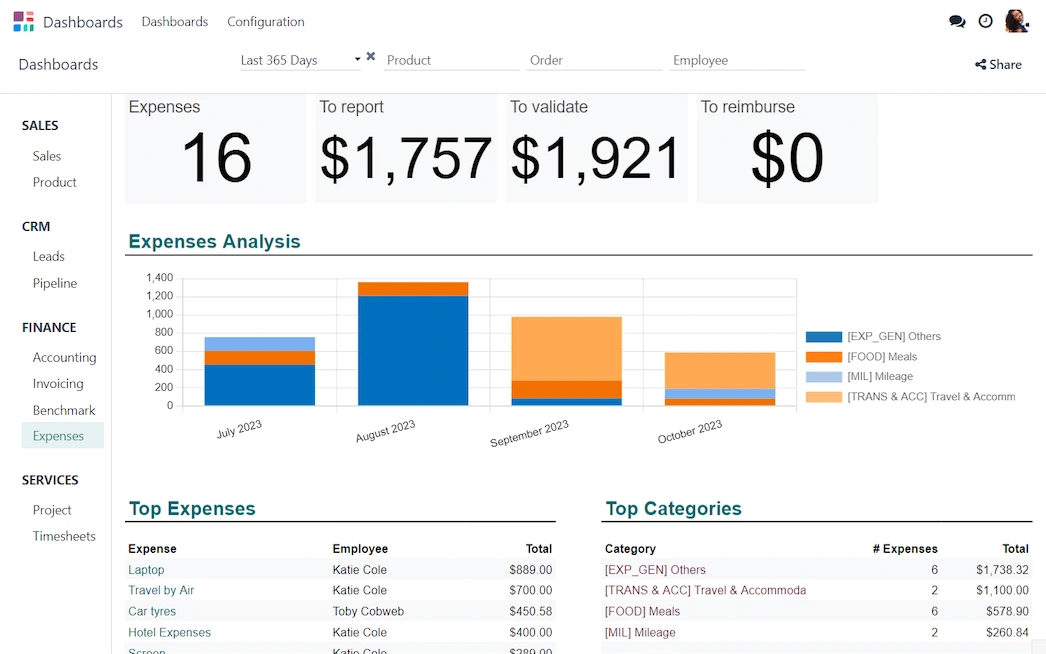
For a structured SME, data-driven management is no longer optional. This is precisely where Odoo had long had a weakness: rich data in the database, but analytical capabilities that lagged behind dedicated BI tools. Odoo 20 is beginning to seriously close that gap.
What about Odoo 20 verticals?
Odoo 20 focuses on enriching its industry-specific verticals: Construction, Hospitality+, Recruitment Agency, Automotive Garage, Nursing Home, and others. On paper, this is attractive: pre-configured packages with business workflows already in place.
Let’s be honest: Odoo’s standard verticals do not meet the real-world needs of a mature SME.
This is precisely what led us, from our first industry-specific projects, to build our own business verticals rather than starting from Odoo’s official packages:
- Construction: quotations by trade, progress billing, retention amounts, change order management, subcontracting integration.
- Retail: omnichannel flows, advanced promotion management, unified POS / e-commerce / inventory integration.
- Logistics & Transport: transport orders, route optimization, shipment tracking, telematics integration.
- Food: batch traceability, best-before/use-by date management, HACCP compliance, production / distribution flows.
- Manufacturing: detailed bill of materials and routing management, shop-floor planning, actual cost calculations, PLM integration.

These verticals are built on the Odoo standard, but add the business layer genuinely expected by mature companies in each industry. This allows us to deliver solutions that can perform reliably in production, within reasonable timelines, without accumulating custom developments throughout the project.
The message is simple: if you are evaluating Odoo for a vertical-specific project, do not rely solely on the commercial information provided for standard packages. Ask your partner to show you concretely how they enhance these verticals so that they can deliver on their promises in real-world operations.
Should you migrate to Odoo 20?
The real question is not “Should we migrate as soon as September 2026?” It is: “Are the new features in Odoo 20 worth upgrading for my company?”
And the answer depends on your current situation.
- If you are running a recent version Odoo 18 or 19 and your processes are working well, there is no rush. You can calmly plan an upgrade to the stable Odoo v20 in the first quarter of 2027, once versions x.1 and x.2 have been released in November and December 2026, bringing stability fixes.
- If you are running Odoo 17 or older, the question is different. Our recommendation is not to skip more than one major version at a time, because differences in database schemas, APIs, and behaviors quickly become difficult to manage. Migrating to Odoo 19 by the end of 2026, and then to Odoo 20 once it has stabilized, is generally safer than attempting a direct jump.
One specific point to monitor for our French clients: the certification of the Accredited Platform (Plateforme Agréée, PA) for electronic invoicing is expected in September 2026, before the release of Odoo 20. Companies affected by the electronic invoicing requirement at that deadline should therefore plan around their V19 instance rather than anticipating a move to V20 in order to meet compliance requirements on time.
Our underlying belief: a migration every three years is a good pace for an SME. It is frequent enough to benefit from major developments without turning maintenance into a permanent project.
A migration is also an opportunity
The classic mistake is to treat an Odoo migration as a purely technical operation. Yet this is precisely the moment when business processes deserve to be reassessed.
The questions that naturally arise are: which custom modules have become unnecessary because their functionality is now available in the standard solution? Which external integrations can be simplified? Which processes have become more cumbersome over time without anyone noticing? Which data has become outdated and should be cleaned up before the transition?
This is the approach we systematically take with our clients: a migration is accompanied by a functional audit and a process review. Not to make the project longer, but to ensure that, by the end, the company has gained operational clarity rather than simply changed versions.
Our migration team
At Eezee, we have a dedicated Odoo migration team. It handles the technical analysis OCA modules, custom modules, integrations as well as planning, testing, and production deployment. This specialization allows us to maintain controlled timelines, even on heavily customized Odoo instances.
If you would like to learn more, you can find all the details on our Migration page.
In summary
Odoo 20 is not a revolution. It is better than that: it is a maturity release. It is not trying to dazzle users with a spectacular feature; it is focused on making the platform more seamless, more intelligent, and more operational for the companies that rely on it every day.
The four strategic developments in this version agentic AI, the Field Service / Planning merger, Accounting improvements, and the qualitative leap forward in data and operational management address real and concrete needs. But as always, the benefits will not be automatic. They will depend on the quality of the preparation, the cleanliness of the data, and the partner supporting you.
The goal is not to rush into an upgrade in September 2026. It is to define now what this version can genuinely bring to your business, and to prepare a migration that is also an opportunity for improvement.
Meet our expert !
Are you preparing an Odoo 20 migration, or do you want to assess what this new version can concretely bring to your business?
Contact us to discuss it.

Odoo 20: de 4 strategische evoluties die er écht toe doen voor uw kmo